
Poetry, Issue 19, 2025-2026
Olivia Velanova
Time Bandits
Newly spring & all my questions answered
in a low basement room. The saints, body parts
cracked off & hidden away, graciously loosen
their long silence. Consider the jaw
of Saint Anthony, suspended behind glass & halo, body enfleshed
in cabochon gems. Where one looks for eyes, they find only teeth. I am assured
medieval people made decisions as consciously as we do
today: mysterious & unknowable people with faces & first loves.
We walk to the train under lush canopies; I think I must hate you
until you offer an earbud. That first time you asked
for me, for everything—I dodged
that self-inflicted chaos & fell off the bed.
As it does, time’s murkiness unfastens the rules we cling to; the untouched
dead assailed by some brave person snipping away the superfluous—eyelashes,
nails, molars popped from skulls. I think about your body under dawn’s
blue tinge & there is nothing I would change. Catherine’s lovely face
enshrined in mother of pearl, briny & unyielding, yet poets in my phone insist doubt
& hesitation are of the same substance & in my dream
last night, it was me in the cage over that inky abyss.
I am not the first to suffer, I am not the first to do anything,
I did not paint orange stars onto barrel vaults, or mosaic
my beloved’s eyes with glass & porphyry; I have not seen
marble ebb & flow under a revolving sunlight, or
built a tiny version of you out of the most precious things I could find—
after you left, laying on the bare mattress, mouth
open, fading perfume on the tongue, tasting your small hands
& dark hair & careful smile. The plate shattering
next to my head. No, I cannot summon my love for you.
Shayana Foroutan
Azadi
— Farsi word, translating to “freedom.”
Winner of the Editor’s Award in Poetry
Azad and I meet for drinks Saturday night on the Lower East Side. He tells
me he doesn’t
think much of his name, but it’s cool that I love it so much. I think about that. Azad
doesn’t think much of the fact that he is always Free. Azad doesn’t think much
of his name, the mantra of the Iranian Revolution: Zan, Zendegi, Azadi.
Woman, Life, Freedom.
Azad and I split our second drink and then our Uber home. I imagine, only
for a second,
what it would be like if we took the subway instead. I wonder out loud about
what I would do
if as I stepped onto the train, Azad suddenly grabbed me by my unruly, Iranian hair
and threw me to the floor. I guess I wouldn’t do anything. I guess I’d be unconscious.
Azad tells me not to get in my head about these things. I think about that.
Azad does not think much of the fact that he is always free.
On October 1st, 2023, 16-year-old Armita Geravand steps on the Tehran metro,
her Iranian hair slipping out of her hijab. Swiftly, she is grabbed, be-daste
“gashte ershad.”
At the hands of the “Morality Police.”
She hits her head on the platform and does not wake, suffocating in a coma
for 28 days.
She is declared brain dead the 22nd. Dead the 28th. I think about Armita
turning seventeen on the hospital bed, eyes taped shut, mind floating above
her small,
sleeping body. I imagine her breath rising one last time, an act of resistance
screaming:
I am still here
before laying down. Azad tells me he hadn’t heard this story ‘til now.
‘Wow,’ he says, ‘They killed her just for showing her hair? Don’t you think
that’s hardly a big enough
offense?’
I think about that. Azad doesn’t think much. He is always free.
Sara Ali
White Triptych
(Inspired by “Pelvis with the Distance” by Georgia O’Keeffe, 1943)
The white world is a closed system
a blind eye turned inward
calcium sky domed over the suspension.
Nothing reddens here
but the beak
sharpening its one argument
against the shell.
In the ice house
the milk separates.
The sheet on the hedge
stiffens into false snow
a rigor mortis of cotton.
This is the cleanliness
that summons the maggot.
The moon dissolves
like a lozenge on the tongue.
Foxgloves hang their toxic throats
over stones washed smooth of story.
Something has finished its feeding here.
The silence is not empty.
It is a bone
scraped clean.
Audrey Crocco
Lenapehoking (Memory and Now)
I. Northampton Town
If you look closely in the field, you might find an arrowhead my mom whispered to me. That day, /
if I hold my breath long enough I can still feel the cinder fill my lungs
we were held in the jaw of perfect harvest containment,
sliding down the Valley’s tongue
of Dutch festivities
sweet sticky apple glaze caught the charcoal like fly to
honey,
Liquid, European dress dancing over dried bank hold my hand.
b’yond: the riverbed:
we found a plot in her most fertile and soft
...s
igh...
...lance
...
Streaks of light caught the soft Earth as I shifted through
her feathery belly.
This land is full of artifacts, Mom cooed,
but other voices in the wind swept hers with it:
Delaaaaaaa
ware,
Lenni
Lenape
Original
People
What knowledge does the arrow’s head
contain?
II. Manhatta (hilly mountain)
“The works of the Great Spirit are seen on every hand,
Flowers, forests, mountains, stars, sun, and even man.
The Lenape all should gather in the Autumn there to praise.”
Richard C. Adams, “A Delaware Indian Legend”
Rivers and histories run blindly, screaming,
Suss
queee
hanna.
Counternarratives in branching streams
of thought.
Land and people synonymous
Shateeee
muc.
No more towering metallic overshadowing memory:
Past the riverbank,
there
is
soft dirt.
Rory Lustberg
Bedtime Sestina
On Jupiter, dinner arrives on a comet
Mother and Father are arguing, but they table
It as Tacky Tourists peer in the window
“I thought Jupiter was supposed to be orange,”
One shouts, and Boy takes a spoon and chucks it, misses by a hair
Mother tsks and tsks, her face white and grooved like a shell
After dinner, Father slumps, a shell
Boy takes a comet
To play, pulling his blue hair
Mother with the etched face clears the table
Father quietly peels an orange
Dessert looks nice through the window
Downstairs, Boy jimmies a window
Sneaks out and nabs a shell
Mother and Father don’t hear; their anger is orange
A Tacky tourist launches a comet
Boy smells smoke while he brushes his teeth and hair
First in flames: the table
It burns, it burns, the table
cries, but Mother and Father are focused on their window
We had it once, Father grits, pulling at his hair
And Mother’s face contorts into a new shell
One where you can’t hear the ocean, only the whiz of a burning comet
The boy puts on his pajamas, orange
Jupiter peels like an orange
father. Everything is silent but the crying table
And Mother and father and the comet
On fire, it’s visible through the window
The boy has lines in his palm from gripping the shell
He closes his eyes, pets his own hair
Mother is thinner than a hair
Father is turning orange
Their perfect house is a shell
Tacky Tourists try to steal the crying table
Boy left the basement door open, a window
As the house burns up like a comet
Boy holds his hair by the window, says goodbye to his comet, drops
the shell outside
Then sits at the table and lets it all go orange.
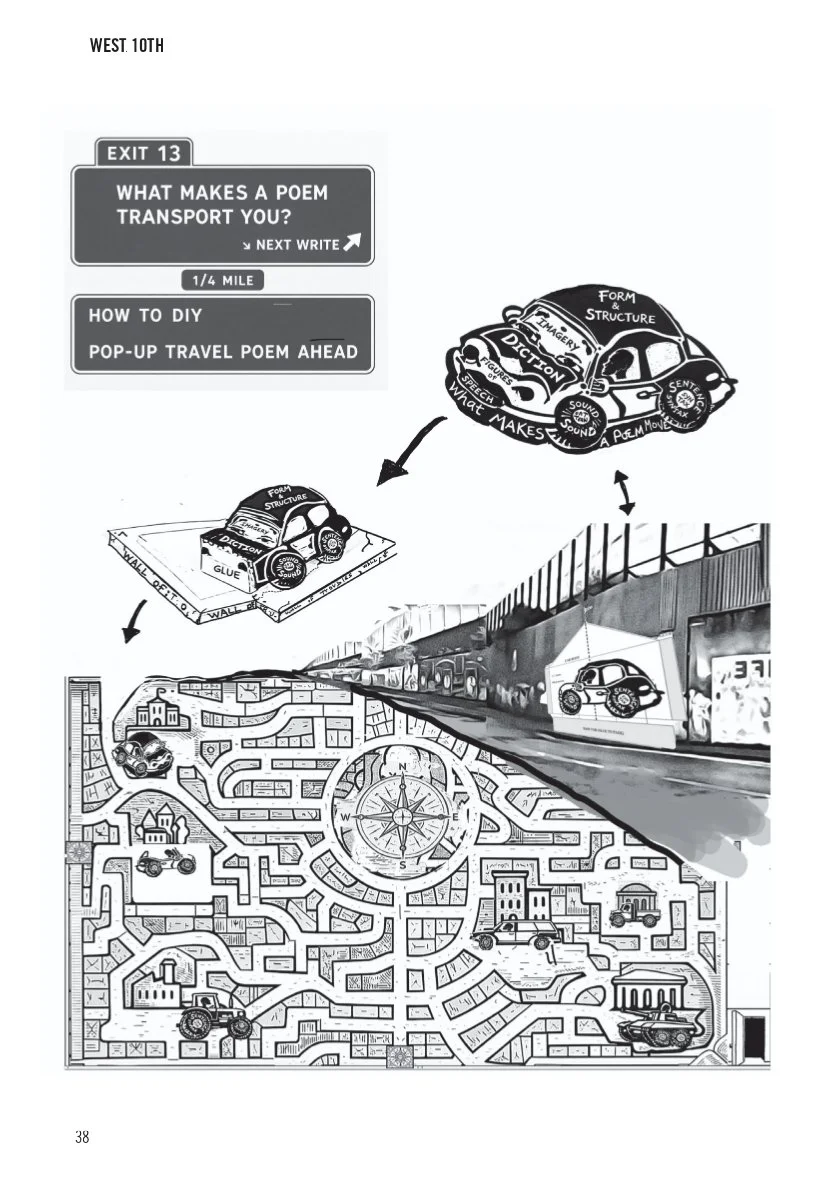
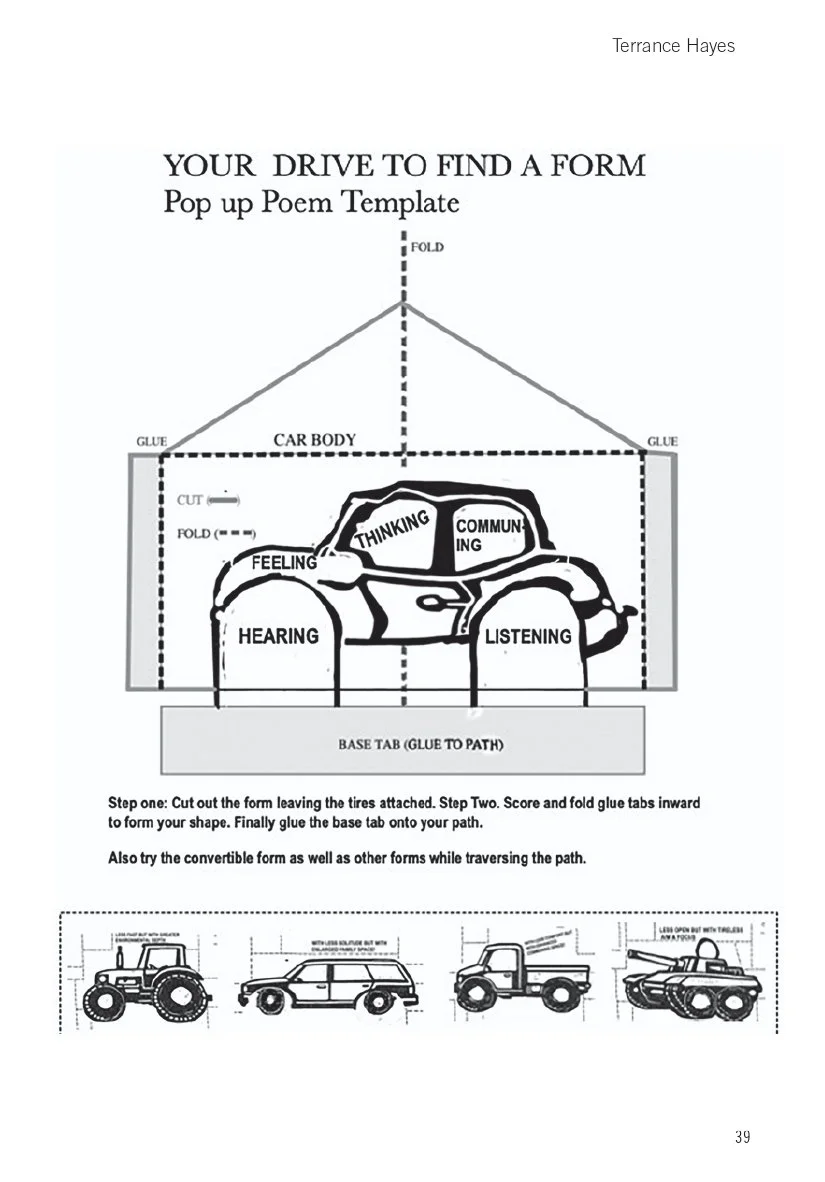
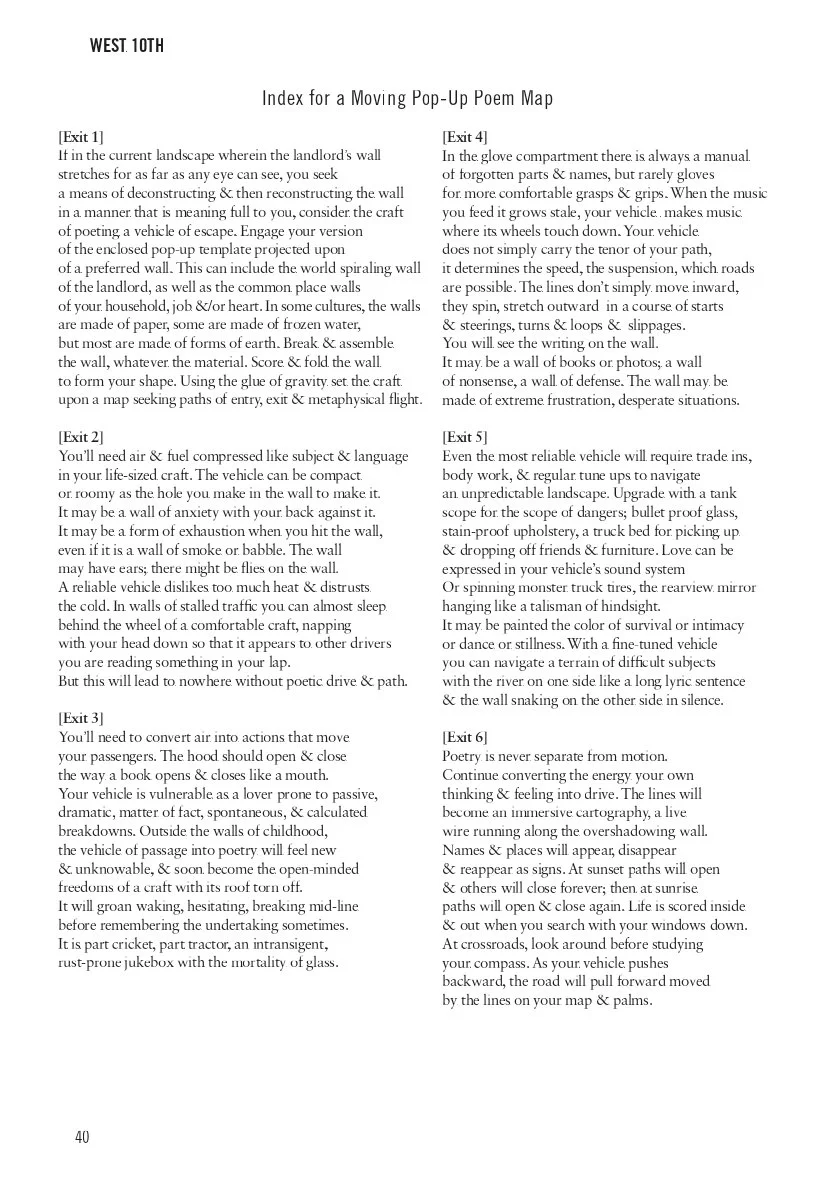
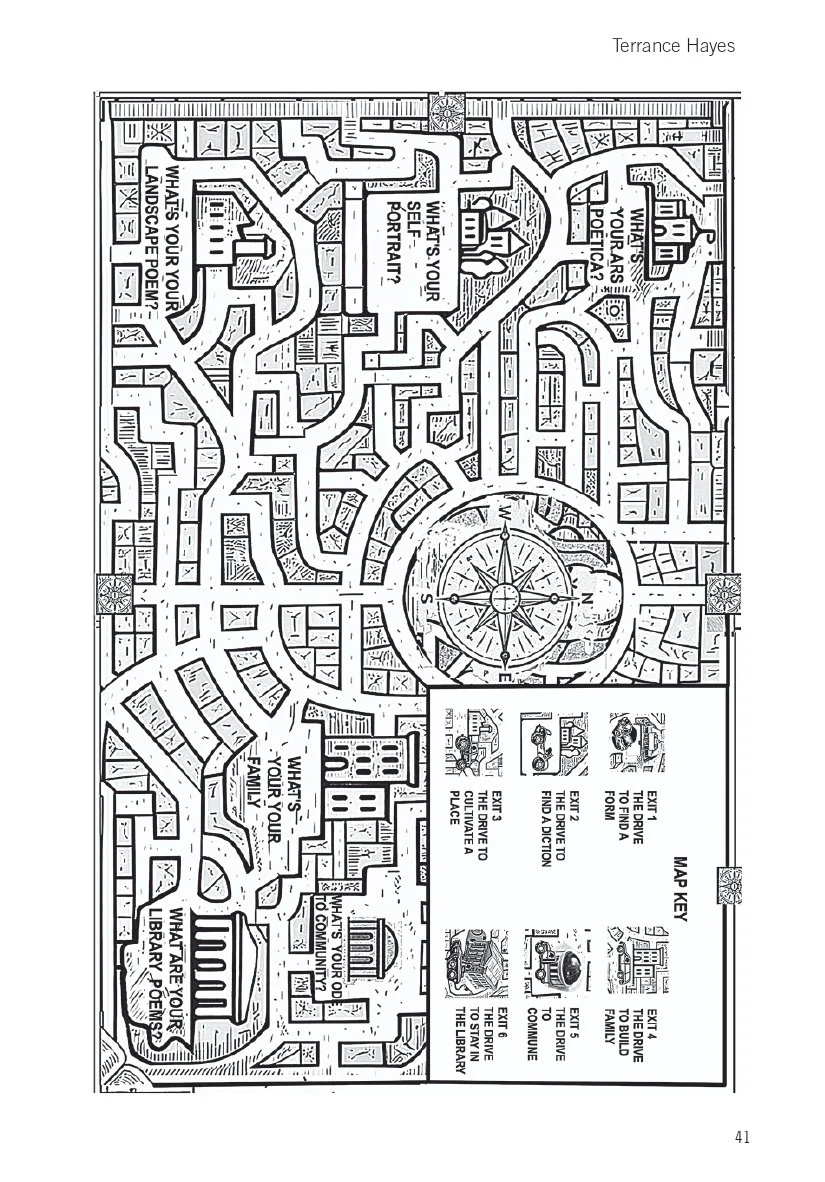
Guest Poem by Terrance Hayes
Pop-Up Poem
Sarah Maronilla
Flaming Autumn, Holy Ground
Today as I was sitting in the backyard
I saw light dispelled in soft, golden lasers that
Gathered between the crooked fingers of the canopy;
I saw where the curtain of sunlight caught between clusters of leaves,
And when the filigree of branches frayed its veil into tantalizing strings.
I saw those taut golden ropes sing out to the wind:
Draw nigh, and play my lyre!
Now that the trees blush the blaze of fire,
I know they mark the memory of the bush on Mount Horem that day;
I know in their rustle they still quiver to the Lord’s voice,
All fear,
All reverence to its echo, its resound.
And I, too—
Like Moses knew,
I know
As their orange scales lilt to the wind, sailing down:
Yes, Father, I’ll take off my shoes;
I am on holy ground.
Katie Liao
Thirteen Ways of Looking at a Dick
after Wallace Stevens
I.
My legs were already spread,
but the stirrups were too far away
for a ten-year-old.
I wiggled farther down.
The anesthetist said I was too fat.
II.
You need to find yourself a husband,
young lady. Yes, so I keep hearing.
IVF is unreliable and so is my visa;
I understand the rules.
If only my clit had grown out.
III.
I once asked a Mormon out to the Père Lachaise.
Well, my friends said, he has the face.
It was not a compliment.
He ghosted me, of course,
no pun intended.
IV.
The gynecologist spurts blue gel on my belly
the way ketchup forces itself on fries.
My friend jokes about the sexual undertone.
My boyfriend does that too,
she says, and the gynecologist laughs.
V.
In the morning news,
a familiar man reportedly fired
after allegations of sexual harassment.
Colleagues said he’s obsessed with genitalia.
Great, now I have to find a new gynecologist.
VI.
If XY chromosomes, then SRY.
If SRY, then testes.
If testes, then testosterone.
If testosterone, then man.
If man, then dad.
VII.
屌 means awesome in Chinese,
so you could imagine how relieved I was
when I first learned English.
I was never taught
how to live without one.
VIII.
My father wasn’t there.
In the hospital, my mother’s head
rested on a box of tissues while I
learned to walk on all fours.
That was my first birth.
IX.
The ultrasound probe is just a euphemism
for the dildo, though I’ve never seen a dildo
with an arm-length needle attached.
Oh darling, they say.
That’s what anesthesia is for.
X.
I kept saying ten
whenever the nurse asked me to scale the pain.
She wouldn’t believe me,
thought I was being dramatic.
I puked on her white shoes as revenge.
XI.
I stared straight
into her
cleavage. I thought,
to be a boy, then,
was to have her.
XII.
The procedures were simple.
In order for the laparoscope to enter my pelvis, he needed to puncture it.
In order for the ultrasound probe to enter my vagina, he needed to penetrate it.
The hardest part was always stitching me back up.
He had to keep me fuckable.
XIII.
Strap one on,
preferably the purple one,
really feel it out.
The trick is to think
yourself God.
Evelyn Meeker
Renaissance Woman
Today I had my teeth power-washed
and I feel brand new.
I wish I could have that for all of me—
wish I could lay myself naked
on the doorstep of every doctor in America
and ask them to love me in their scientific way.
Wish I could leave myself in a baby bassinet
outside a fire station
and they’d tell me where home is
without asking a word from me.
They’d assume I don’t know any yet,
and at the very least, float me down a river
in a picnic basket.
I’d sink, of course.
My shoes are concrete
and I know it’s hard to get clean—
even harder to stay that way.
Best to cope according to old girlhood strategies,
gnawing off my own arm in the corner,
rocking back and forth, repeating:
I am good. I went to Sunday School.
There I saw Jesus grow out of the ground.
God knows me criss-crossed on linoleum
and I’m invited to his kingdom anytime.
But I’m not little. I’m not a precious thing.
I’m not even a teenage girl anymore.
I ate that smaller self along with the garden
and blamed it on the deer.
This is something I realize only when the
mushrooms hit in the Macy’s attached to the Springfield Mall
and under the fluorescent lights:
I think I’ve had this dream before.
The Ruby Tuesday burned down.
I’m older now, a renaissance woman: my hips
are child-bearing, my right arm
is a Swiss Army knife, and my head hurts.
I’m a good daughter and an even better liar.
I am so many things I can hardly keep count.
This is my secret trick,
like a magician’s assistant
who will go down with her cruise ship.
I can rearrange myself to fit into any compartment.
Just point to where you want me and I’ll start sawing.
Naseem Anjaria
Black Southern Porch
I believe that I exist
I believe that joy doesn’t lie to me
Happiness is not my foe.
I believe that
Sand clutters on a beach
And gray asphalt scalds in the sun’s yellow gaze
I believe white is
A color pure and untouched
I believe bright purple neon signs
Are as beautiful as
Pink-painted wings of butterflies
Growing softly in vibrant cocoons
That are as gorgeous as the river
I swam out of
When I chased my brother
Out of my mother’s warm womb.
I believe in living
And breathing in the promise that
Tomorrow
Will be a day filled
With the songs of poetry read by
The breaths of those
Who are fulfilled by the
Truly wondrous and curious people
Who walk our earth
With elegant soles
That have yet
To become hardened by rough rocks of time.
I believe in time too,
Her sweet old soul,
Old bosom perched atop a rocking chair on a black southern porch.
Amy Shin
Thinking of Our So-Called “History”
I crawl inside my fist,
wondering what it’s like
to have the barrel of a gun blinking in my mouth,
the way little girls three generations before
were torn open by the good strong hands of soldiers
as public toilets for catharsis, things to use and discard.
The crimson tides surging in my belly mirror
the bleeding sun of the Japanese flag.
I think of the
little girls back home from school, twirling in golden spirals
around a blossoming persimmon tree;
little girls blooming little dreams of sunlit stalls and paper kites,
of selling roasted chestnuts next to mother under lantern light;
little girls swallowed beneath a soldier’s arm, afloat
across their backyard before a chance to say goodbye
only to find their mother crouching
in the same corner of a rattling military truck;
little girls no longer little nor girl,
but a crowded tourist attraction, free-entry for all;
soldiers slithered up onto sunken mattresses,
pumping seeds into tattered vaginas,
a crumpled ticket in each fist; so many men to comfort;
little girls counting sheep to the sound of corpses trundling in carts,
watching Japanese soldiers atop their mother, bloodied and bruised;
little girls with limbs like torn ribbons, clutching
the severed leg of their muddied rag dolls;
little girls stepping over erupting bodies
to arrive at their station on time;
crackling away through the merciless night;
little girls distilled into polished statistics of history;
little girls pressed onto paper:
20,000 killings or is there another zero?
little girls languishing inside an enemy’s body;
little girls
little girls
little girls
buried beneath my skin
clenching muffled apologies.
Avi Zalkin
A Smile Line Psalm
The river licks sweat off the sun
Spits spangles on Manhattan:
Strips of blue and red and bone
On bathhouses and megaphones
On twisted arms and sirens’ laughter.
Manufactured lightdrops drip
On golden calves inside museums
That tourists worship for a minute
Before they scorn the swollen apple
And every Eve who bit it.
Scrapbook faces become overwritten
With scrawls of our own lust—
Streetlamp fingers peel the clothes
Off bankers dressed in judges’ robes,
Consigning them to New York City’s Trust;
While cardboard bums’ blue lips
Turn chapped and raw and split
With prayers bent on forgiveness,
The mayor treads on concrete bribes
Embalming gilded imprints.
And I can’t speak a lick of sunlight
Cannot heave my golden tongue
Across the howling hermits sculpting breath
In barricades against coquettes
Who whisper: “Darling, come.”
I cannot shuck the shadows off
My paper-mâché gray ladies
Who pet me with a frown
Before they return to angel dust
Awaiting flesh my flesh will crown.
But on the corner of 14th st.
I see lips drop like nectar
Into crawling catacombs
While scaffolds of curdling foam
Erode the Union from the center.
Encircled by swarms, shreds of lit lamps
In the beehive husks of buildings
Band together like a fist
And in each yellow window frame
One separate million people kiss.
Now the lightbulb studded tongue
Of the Hudson slurps up moonshine
And our looms of threaded blood.
And in our shadow of the flood
A single hairline cracks the spine—
A spinal tap, a thousand fractured pipes
Shoot souls up nostrils of the black
And give to G-d his own design;
These white hot strings of lightning
Give the Lord his smile lines.